
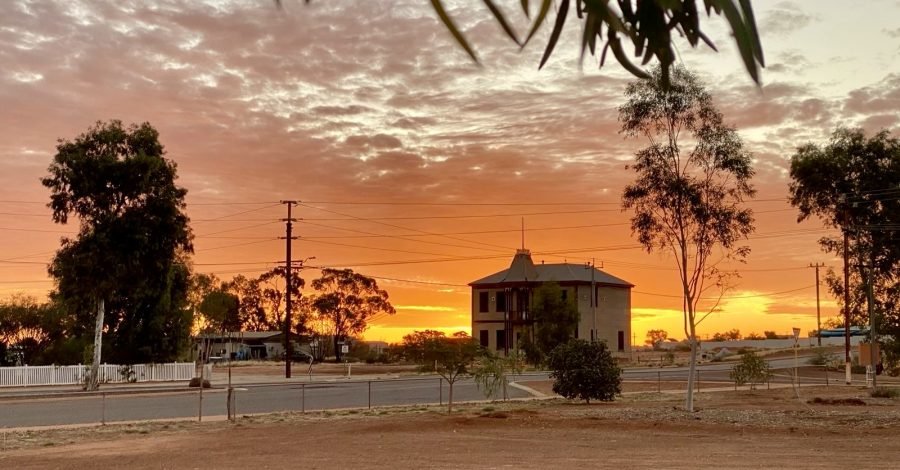
Arriving in Mount Magnet expecting a lot of old buildings and steeped in history, sad to say, we were underwhelmed. It was late-ish though so we decided to stay overnight, and move on to Cue the next day.
We did our research on Cue (no pun intended) but couldn’t find much useful information, so assumed that like Mount Magnet, there’s really not a lot to see, and in Mount Magnet, anything that might have been of interest, was closed.
As for Cue, boy were we mistaken. We’re 650 km northeast of Perth with lots of well preserved old buildings and lots of history. A pretty little outback town, and as with most country settlements out here; it’s flat and easy to walk to visit features.
It was founded in 1893 after an Aboriginal prospector name Governor found a 10 ounce nugget of gold at Kintore Blow, a hill in the town’s centre, sparking a gold rush, a town was built, and two men, Michael Fitzgerald and Tom Cue registered the claim. The consensus here is that the town was named after Tom. By 1893, Cue was officially named, and the Murchison River’s proximity facilitated growth.
Later a reef of gold was found at the place known as Day Dawn. The Great Fingaill Mining Company was formed and they built a large building holding all the necessary offices, but the mine closed in 1918, and what only remains today is the remains of that magnificent building. Slowly falling into disrepair, its been fenced off by the shire.
At its peak around 1900, Cue’s population exceeded 10,000, making it the thriving center of the Murchison Goldfields. The town boasted electric streetlights, a railway station (opened 1897, closed 1978), and three newspapers shared with nearby Day Dawn: The Murchison Miner, The Murchison Times and Day Dawn Gazette, and The Murchison Advocate.
Cue is quiet, even though the Great Northern Highway runs right through the middle with road trains roaring through. The feature place to get something for snacks, lunch and drinks is the Roadhouse. It also has a grocery store attached and is open 24 hours and does a roaring trade. Most of the shops have long closed, with so few people available to not patronise them. The current population is 178.
There were three hotels, now only one, The Murchison Club, has survived. The other two are still there but not decaying quickly, they are kept pretty much in their original condition (although some much-needed maintenance wouldn’t go astray), one, The Queen of The Murchison, being accomodation for backpackers.
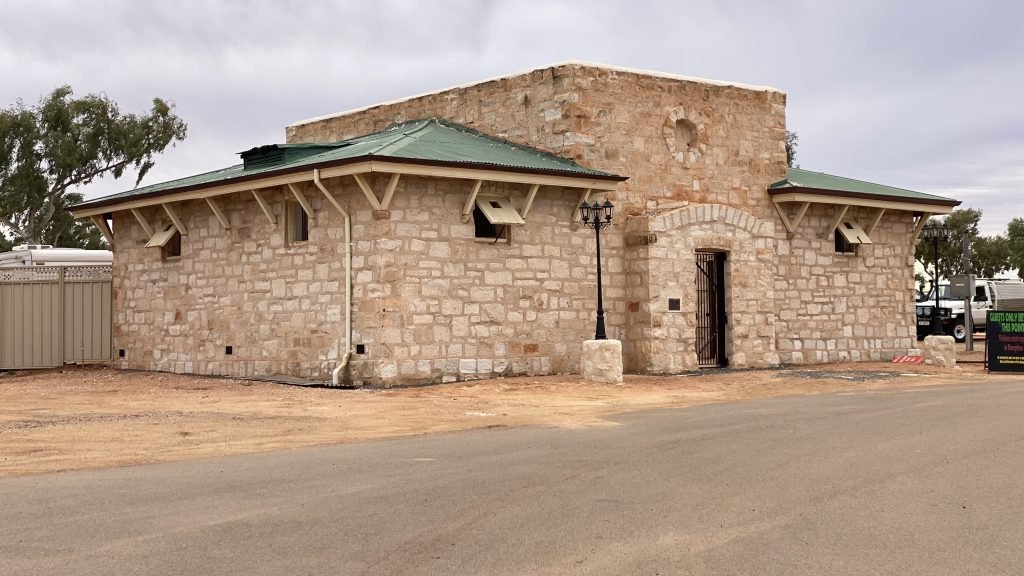
In addition to the shire-run caravan park adjacent to the old gaol, there is a 48 hour RV stop for caravans, motor homes and camper trailers, but you must be self sufficient, hence no tents or swags allowed.
The ablutions block at the Caravan park, used to be the old goal, but this has been reclaimed, and slowly they are rebuilding the structure and cells. It was originally built in 1896 and it’s unusual to see that they have a central courtyard, with the cells off from this. It officially closed in 1914, but was used as a lockup until the 1930s.
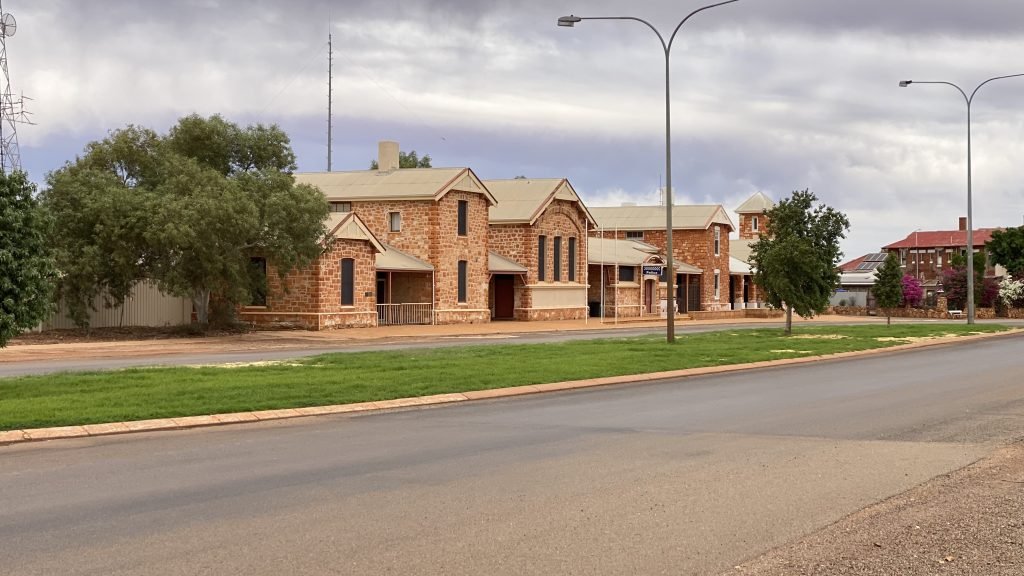
The Government Buildings housed mainly offices for roads, minerals, water and police station and courthouse . It still has the court house, but now houses the CRC, and post office. Truly beautiful architecture. Other close-by buildings are The Gentleman’s Club, now the Shire Offices, The Club Hotel, and Bells Emporium, which is still being used today in its original purpose.
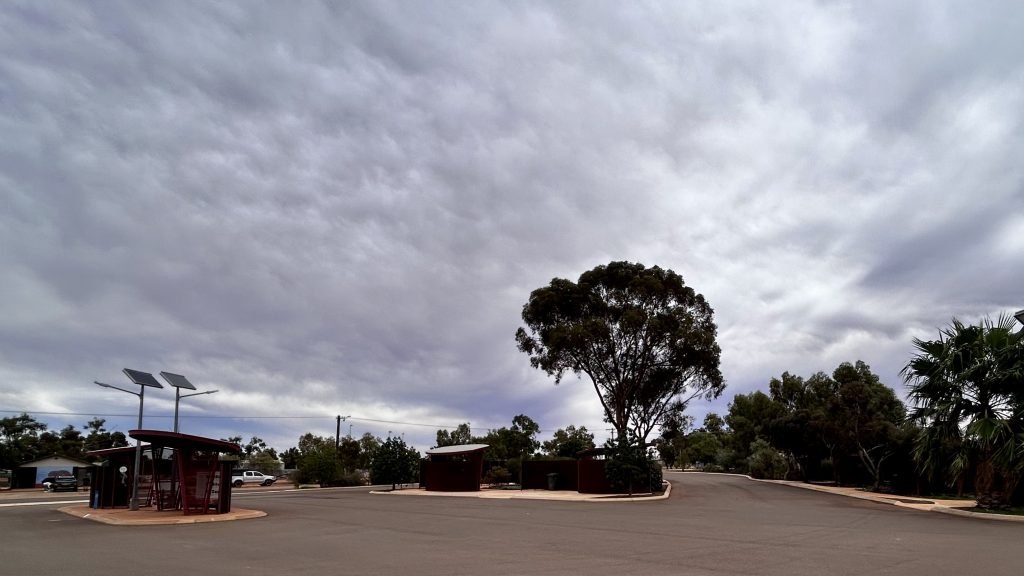
They have a great little traveller’s rest stop among trees near the caravan park. The paved roadways winding through with several private tables and chairs for a quiet picnic or just stop for a cuppa. There are potable water taps and bins throughout with information boards a photos on what the town was like, back in the day.
There is the original railway station to view, but is now on the edge of an oval, and is used as a spectator stand for sporting activities, and functions like Australia Day ceremonies.
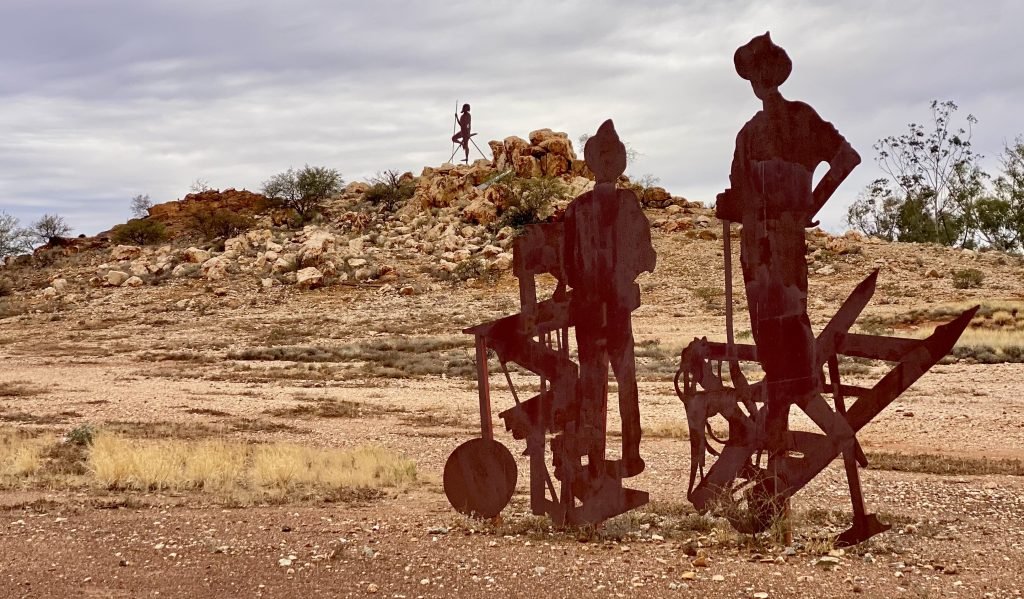
Throughout the town there are metal sculptures and cutouts of drovers, farmers, animals, an Aboriginal man with spear on top of granite rocks.
Out of town at Walga Rock there are centuries old Aboriginal paintings in the rocks or view, and a walled ANZAC memorial named after the town’s VC recipient, Stan (Arthur Stanley) Gurney, small but beautiful, with bricks along the garden edge with names of war veterans.
They have a water park for the children, along side a great skateboard area, next to the Community Hall. They have thought of everything for this tiny township, keeping in mind the hot climate. The place comes alive around wildflower season, but alas, we won’t be here to see it.
Definitely a place to visit, but if you’re prepared to see it all, I’d recommend an overnight stay. Or two.
Why Is Cue Called the Queen of the Murchison?
Cue earned the title “Queen of the Murchison” due to its central role in the Murchison Goldfields and its significant gold production during the late 19th and early 20th centuries. The Murchison region, known for its rich gold reefs, saw Cue as its economic and cultural hub at the height of the gold rush.
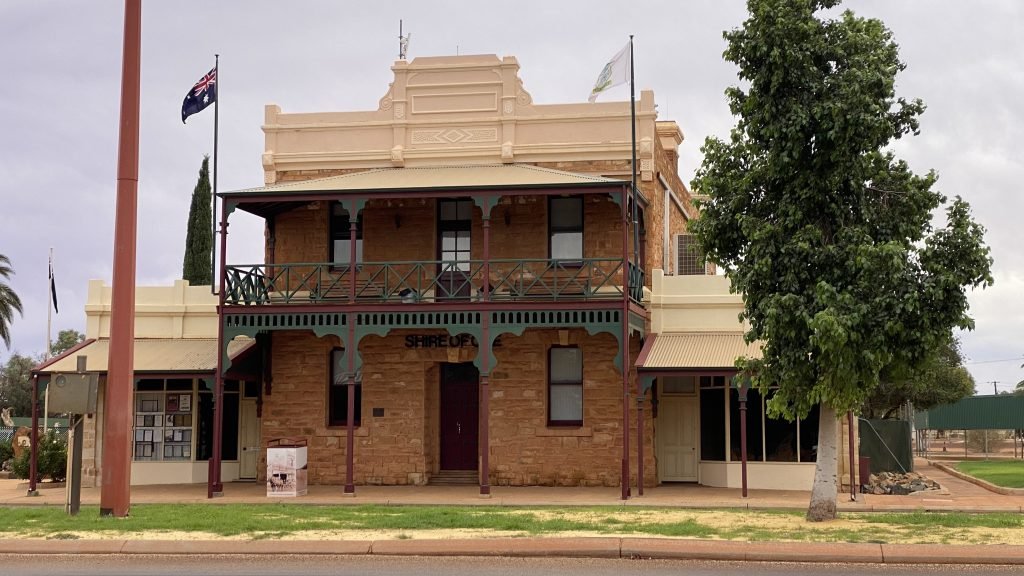
The town’s grandeur at the time, exemplified by its opulent buildings and infrastructure like electric lighting and a railway, set it apart from other settlements. As May Vivienne wrote in Travels in Western Australia (1901), Cue’s bustling streets and modern amenities made it feel like a metropolis emerging from the outback.
The phrase reflects Cue’s historical prominence and enduring charm. Its well-preserved heritage buildings, such as the Queen of the Murchison Guest House (originally the Capitol Hotel, built c. 1936), continue to draw visitors. The town’s natural attractions, including vibrant wildflower displays from July to September, and its role as a gateway to the Murchison and Goldfields regions, reinforced its regal status.
Cue remains a “living example of the past and present,” blending history with good old-fashioned outback hospitality.
Have you been here? What were your impressions and experiences?
Leave a Comment