
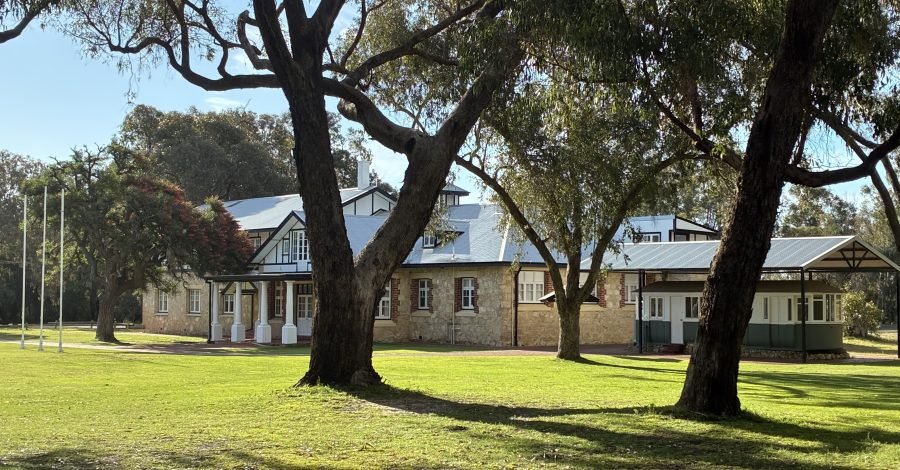
In October we needed to get back into life; and a month here volunteering gave us that chance. A paced workload in an otherwise relaxing environment. Over the years, every now and then someone asks us where to camp when you can’t be bothered with a six-hour drive but still want to wake up to birdsong instead of the neighbour’s leaf blower. The answer is always the same: Yanchep — if you can get in.
It’s about 50 kilometres north of Perth, so you can knock off work on a Friday, throw the swag and the rest of the kit in the ute, and be sitting under a tuart tree with a brew before the sun’s gone down. No dramas. Before you book though, pay close attention to the camping options — you’re wasting your time for example, trying to pitch a swag or tent on the tarmac sites.
A bit of history
Yanchep’s story runs far longer than the camping. The land is Whadjuk and Yued Noongar country, and the park’s Aboriginal cultural experience is well worth your time. It’s a lovely way to see the place through the eyes of the people who’ve looked after it for tens of thousands of years.
Then came the settlers (Henry White, after whom the campground is named, is recorded as Yanchep’s first back in 1899), followed by the tourism boom of the 1930s, when Perth families came out for a day of rowing on Loch McNess and a bite at the Tudor-style Yanchep Inn. It’s got a charmingly old-fashioned, grandparents’-holiday-snaps feel, and we mean that kindly.
These days you can poke around the limestone caves (Crystal Cave is the star), wander the lakeside trails, and spot wildflowers in spring.
Poppy, Scout and the koala crew
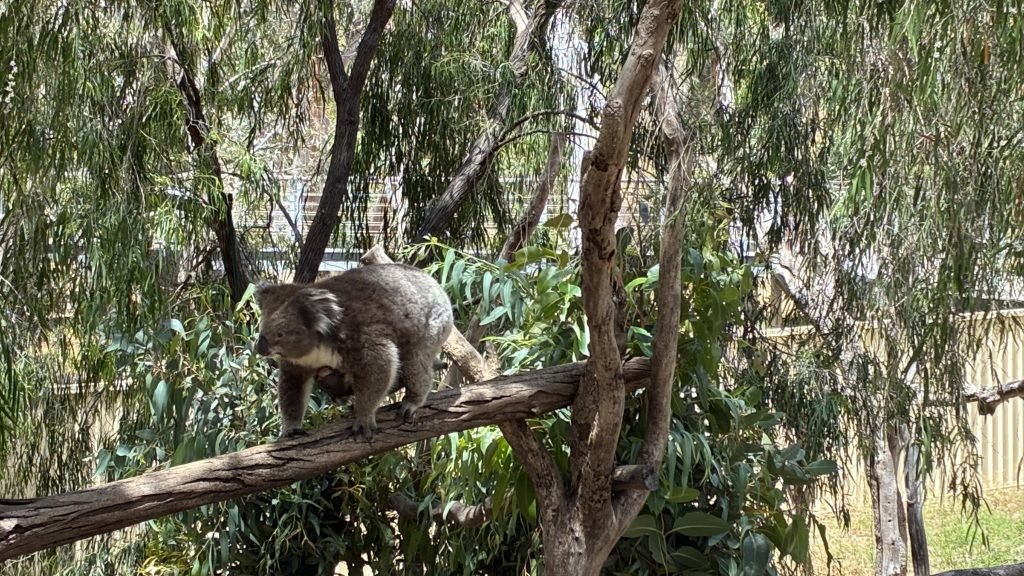
Now, the important bit. Koalas aren’t native to Western Australia, but Yanchep has had them since 1938, and the colony is a proper local celebrity act. Poppy, who made the trip over from Ballarat Wildlife Park, is the one we’re gushing about right now. She and her mate Franklin Doogsie have welcomed a new joey, and that little bundle of fluff is Scout.
Scout is just starting to poke out of the pouch and have a squiz at the world, and honestly, a koala joey peering over mum’s shoulder is the best thing you’ll see all week. Poppy and Scout are doing very well, and the rangers are keeping a close eye on them.
A few tips for visiting:
- The koala boardwalk is open daily, roughly 8am to 4.30pm.
- Koalas spend most of the day snoozing, so be patient and look up.
- Dogs aren’t allowed, and park entry fees apply.
Boomerang Gorge: the walk on your doorstep
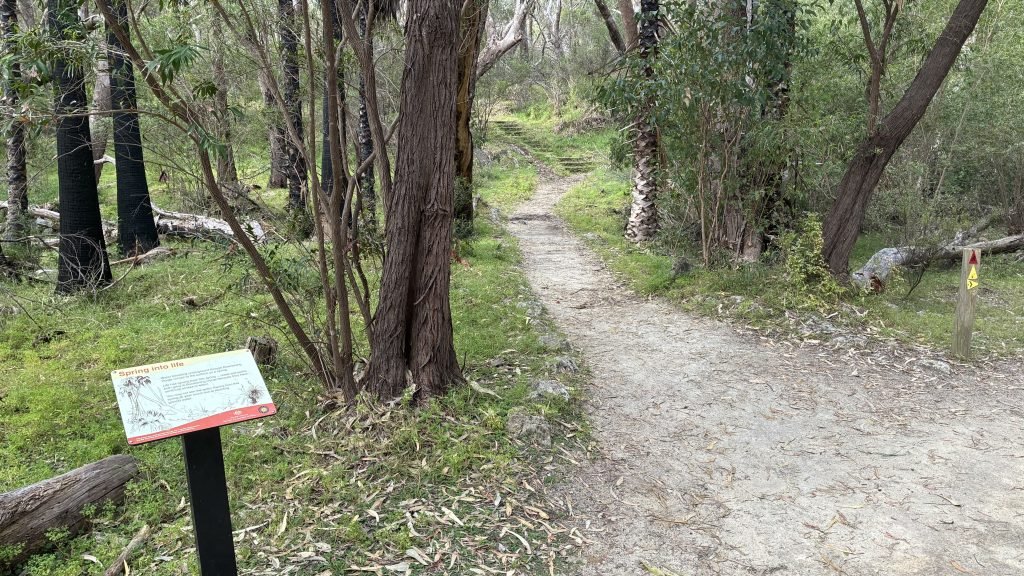
If you only do one walk at Yanchep, make it this one. Boomerang Gorge is an easy stroll from the campground, so you can pop in before breakfast or after the dinner dishes are done. It’s tucked into the bush, and plenty of visitors walk straight past it on the way to the koalas, which is a shame.
What it is. The gorge was once a limestone cave system, and over time the roof collapsed, leaving a shallow, leafy hollow with a path winding along the bottom. It’s only about five to ten metres deep, but it’s remarkably atmospheric. The rock walls rise up on either side, trees arch overhead, and it’s lovely and cool even on a warm day. In places it feels just a little bit eerie, in the best possible way. You can spot a few small caves and interesting rock formations as you wander.
The walk. The path is the Dwerta Mia Walk Trail. The loop from the Boomerang Gorge car park is only about 500 metres, and you can do it in around 20 to 30 minutes, though you’ll want longer if you stop to read the signs (we always do). It’s rated easy, and it’s a universal access path, so it’s suitable for wheelchairs, prams and scooters. That makes it a ripper for little kids, grandparents and anyone who wants some bush without the puff.
What you’ll learn. Along the way there are interpretive signs explaining how the limestone formed over hundreds of thousands of years, and sharing a bit about Aboriginal culture and connection to this country. It’s a handy crash course in the geology and history of the park, with no lecture required.
The name. Dwerta Mia is usually translated as “house of the wild dog”. The park’s trail guide notes that Aboriginal guides leading early explorers to this area reportedly chose not to venture in, as the place was believed to be inhabited by spirits. It adds a bit of atmosphere to that cool, shadowy hollow.
Wildlife. Keep your eyes peeled, because kangaroos are regularly spotted at the top of the gorge, and the birdlife in the trees is fantastic.
The bees of Boomerang Gorge. Here’s the bit that has us really intrigued, because there are two very different bee stories in this gorge.
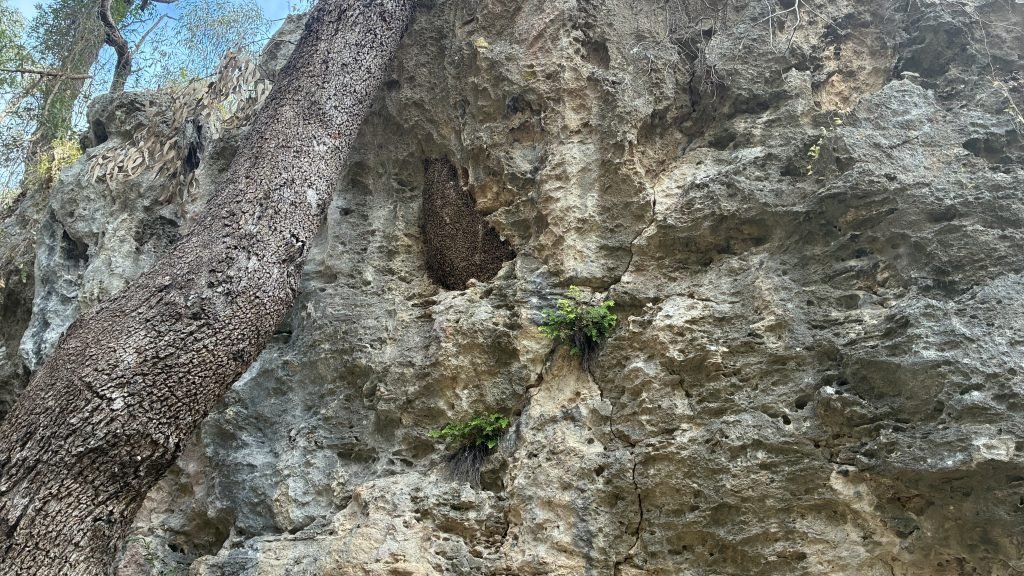
The hive in the rock. Look up at the limestone and you might spot a hive tucked into the rock. These are feral honey bees, the introduced European kind, who’ve made themselves at home in the old cave walls. They’re a good reminder that this place is full of residents you don’t notice at first glance.
The burrowing bee in the ground. The real star, though, is a little native called the plasterer bee (Trichocolletes orientalis). Plasterer bees get their name from the way they line their nest burrows, which they dig into the soil, with a waterproof, cellophane-like coating. Each mum stocks her brood cells with pollen and nectar, mostly from native pea flowers, and the babies grow up underground.
What makes this species special is where it turned up. When local researchers looked into a nesting site at Yanchep, the bee was identified as an eastern Australian species that hadn’t been recorded in Western Australia before. Dr Terry Houston from the WA Museum dug into the nesting biology, and he found that the only pea flower in the park these bees seemed to rely on was Hardenbergia comptoniana, the native wisteria that drapes the bush in purple in late winter and spring. So if you’re out and about in spring, keep an eye out for the purple flowers and the busy little bees working them.
A few bee-friendly ground rules: admire from a respectful distance, don’t poke at the hive, trample the ground or dig around the nest sites (the burrowing bees are easy to harm without meaning to), and keep little hands well clear. If anyone in your group is allergic to bee stings, make sure you’ve got your medication handy.
Want a longer walk? The Dwerta Mia trail links in with other trails in the park:
- Caves Trail. This loop of around 4.5 kilometres crosses the top of the gorge, with views down into it, and finishes at Crystal Cave, where there’s parking and toilets. Watch your step near the edge, especially with little ones.
- Ghost House Trail. This longer trail passes the start of the Dwerta Mia path, so you can slot the gorge into a bigger day out.
- From the visitor centre. You can also start at the McNess House Visitor Centre for a longer version of the walk, or stick with the short loop from the car park.
Good to know.
- There’s limited parking at the entrance, so walking over from your campsite is the easy way to go.
- It’s a lovely spot for a picnic, so bring a thermos and some snacks.
- Take drinking water on every walk, even the short ones.
- For longer trails, register at the McNess House Visitor Centre before you set off.
- Keep your voices down. It’s a peaceful spot, and the kangaroos will thank you.
Why we love Henry White Campground
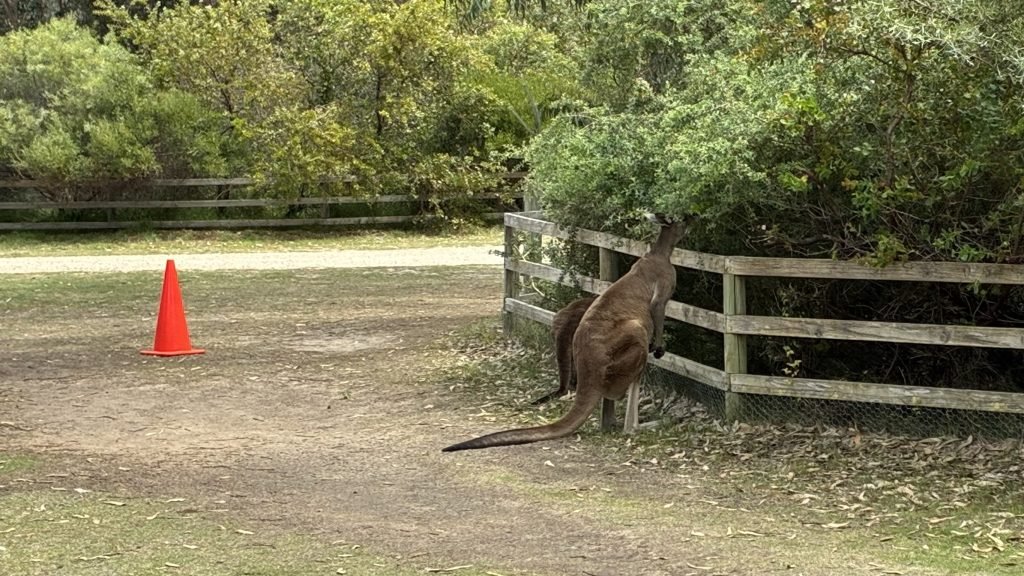
Here’s where it all comes together. Henry White Campground sits among tuart and banksia woodland, and it’s a short stroll from the koalas, the caves and the trails, including Boomerang Gorge, which is practically on your doorstep. You get proper bush camping without the long haul.
We’ve been campground hosts here a few times and we’ve learned lots — hit us up with any questions.
The birds. Wake up before your alarm to a full dawn chorus. Keep an ear out for the squawk of Carnaby’s cockatoos overhead.
The locals. Kangaroos wander through at dusk like they own the place, which, fair enough, they do.
The comforts. This is the part for those of us who love nature but also love not smelling like a campfire for a week:
- Hot showers (bliss after a day on the trails)
- Flush toilets
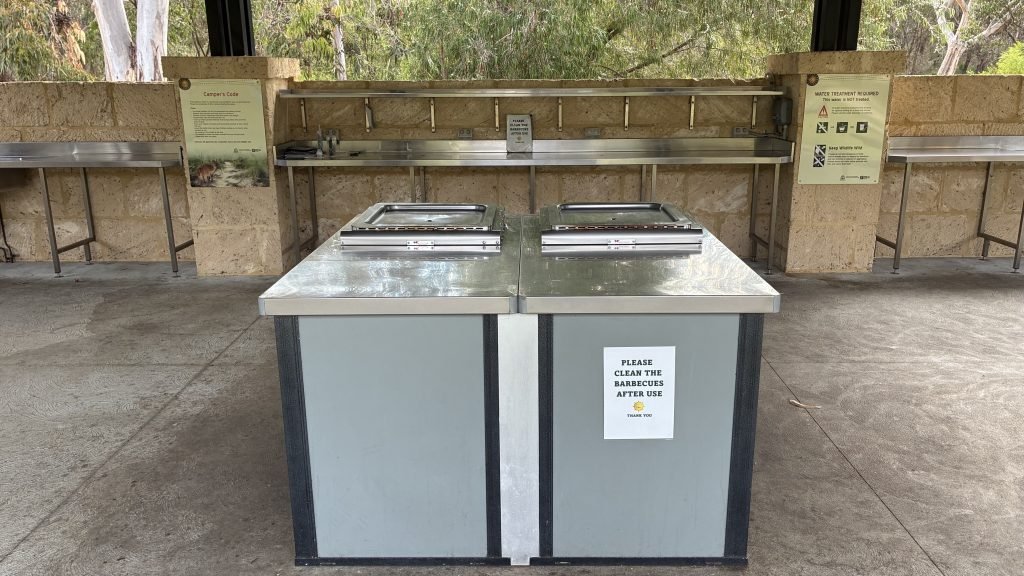
- The BBQ shelters. These are the real stars. Two stainless steel gas barbecues, a few power points for your slow cooker, kettle or coffee gear, and hot water on tap, so washing up is a breeze. There are plenty of tables and bench seats both inside and out, so you can dine in the shade or under the stars. If the weather turns, you can just move inside with your snags and a cold one.
- The fire pit. The resident campground hosts have set up a communal fire pit, and it’s the heart of the place come evening. Toast a marshmallow, swap stories with the camper next door, and listen to the bush go quiet around you. (Check for fire bans before you go, as the pit’s only usable when conditions allow.)
The practicalities. Sites suit tents, camper trailers, caravans and campervans, and you can stay up to seven nights. The friendly hosts are on hand if you need a hand or a chat, and they’re the ones who keep that fire pit going.
Leave the noise at home
One thing worth saying plainly: people come to Yanchep for the peace and quiet of a national park. That’s the whole point of the place. The magpies, the rustle of the banksias and the distant call of a cockatoo are the soundtrack here, so please leave your own at home.
That means no blaring doof-doof speakers, no late-night party playlists, and no revving about when everyone else is trying to enjoy a quiet dinner under the stars or get the kids to sleep. Keep the chat and the laughter at campfire level, and pack your headphones if you can’t live without your tunes. Your neighbours (and the koalas, who are very much night owls with sensitive ears) will thank you for it.
It’s a great place to teach kids the value of peace and quiet, studying the stars.
Before you go
- Book online. Bookings are online only through Parkstay WA, and weekends and school holidays fill up fast.
- Bring your own drinking water. The park says supply isn’t guaranteed and it needs treating, so fill up before you leave home.
- Check fees. Camping and park entry fees both apply, so confirm current prices on Parkstay.
- Keep it quiet. Leave the speakers and the noise at home, and keep things low-key once the sun goes down.
- Leave no trace. Take your rubbish with you, don’t feed the wildlife, and leave the wildflowers where they are.
So pack the kit, grab the thongs and the bug spray, and go say g’day to Poppy and little Scout. Yanchep’s a great retreat.
It’s been great for us, as we started to take our first steps into a new normal. And Michael has made leaps over the month, with truly great support from National Parks staff; Clancy, Pip, Bryn and a whole crew of parks staff.

Leave a Comment