There’s a special kind of tired that only touring people know. It’s the “we’ve seen the inside of too many dusty exhibit museums and servo pies” tired. So we did what any sensible pair would do: pointed the ute east, swapped the road for a farmstay, and promised each other absolutely nothing was on the agenda.
Well. Almost nothing. Turns out Brookton has a few surprises up its sleeve.
Getting There
Brookton sits about 135 km south-east of Perth via the Brookton Highway. That’s under two hours, or roughly three podcasts and one lively debate about whether it’s a “servo” or a “petrol station” (it’s a servo, and we’ll hear no argument).
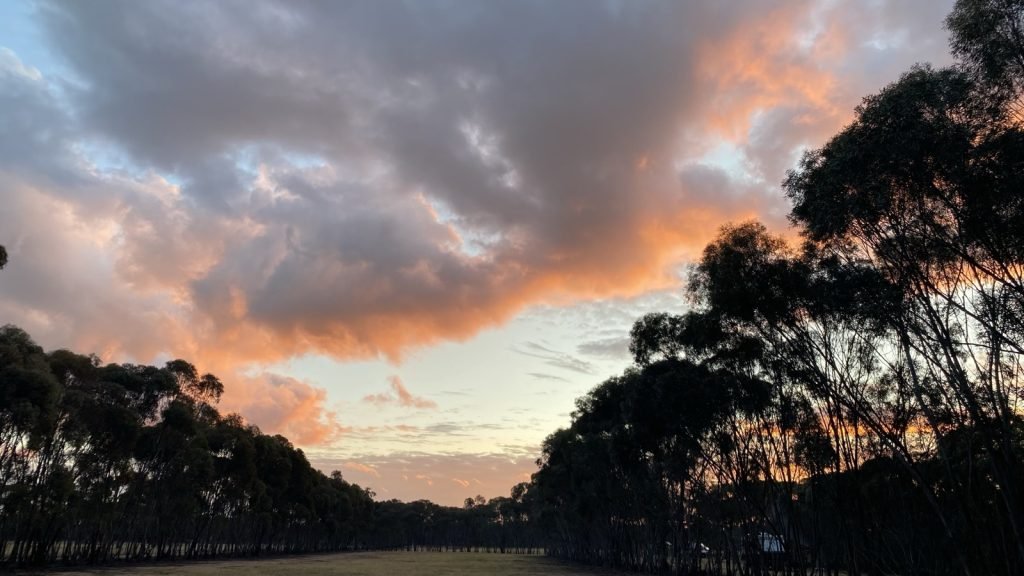
We rolled into McCabe Farm just as the afternoon light turned the paddocks gold. Kettle on, boots off, phones face-down. Bliss.
The Farmstay Life
The best part? The silence. Then the stars. Proper, Milky-Way-across-the-sky stars, the kind you just can’t get in the city. We spent a few chilly evenings with a cuppa (and, okay, for Kay a cheeky white) doing absolutely nothing, and it was glorious.
A Quick History Lesson (We’ll Keep It Brief, Promise)
Brookton’s story starts with John Seabrook, who settled the district in 1846 and named his property “Brookton House”. For years he was the only European in the area, apart from itinerant sandalwood cutters, until his stepson took up nearby land in 1864. More settlers followed in the 1860s and 70s, cutting sandalwood and running wheat and sheep.
Then came the Great Southern Railway, which opened in June 1889 with Brookton as one of its original stations. The railway gave the isolated farms a centre, and the town grew around it. The townsite was gazetted in 1895 as “Seabrook”, but confusion with another Seabrook near York saw it renamed Brookton in 1899.
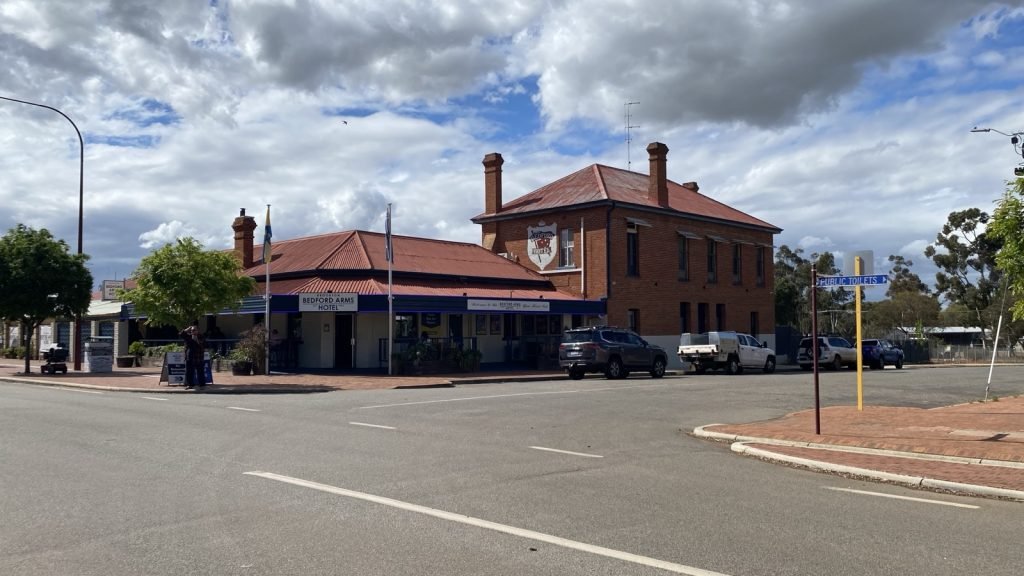
Yes, you read that right: the town is named after a house. Very Australian.
What to See and Do
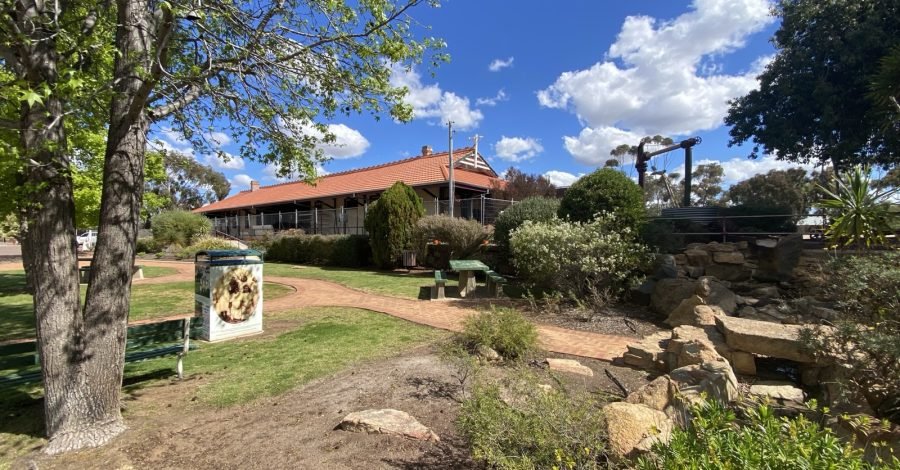
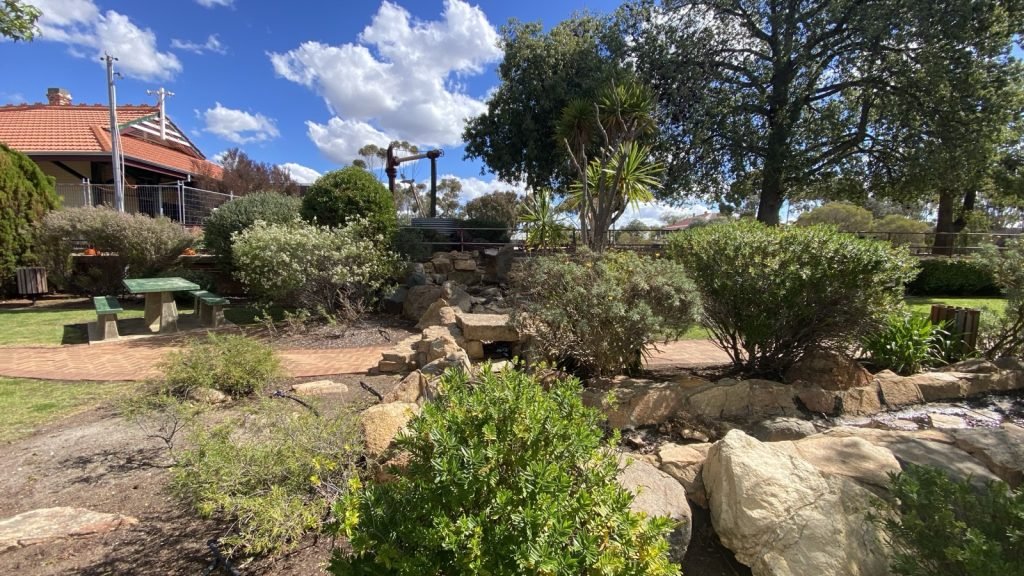
- Old Railway Station and Pioneer Park. The station dates to 1899 and sits right in the heart of town. Pioneer Park next door is a lovely spot for a picnic, and you can pick up some country arts and crafts while you’re there. (More on the station’s dramatic recent history below.)
- Brookton Museum and Heritage Centre. Housed in the Old Police Station, it’s packed with local memorabilia, geology specimens and Grandma’s Wash House. Opening arrangements can be limited, so ring ahead.
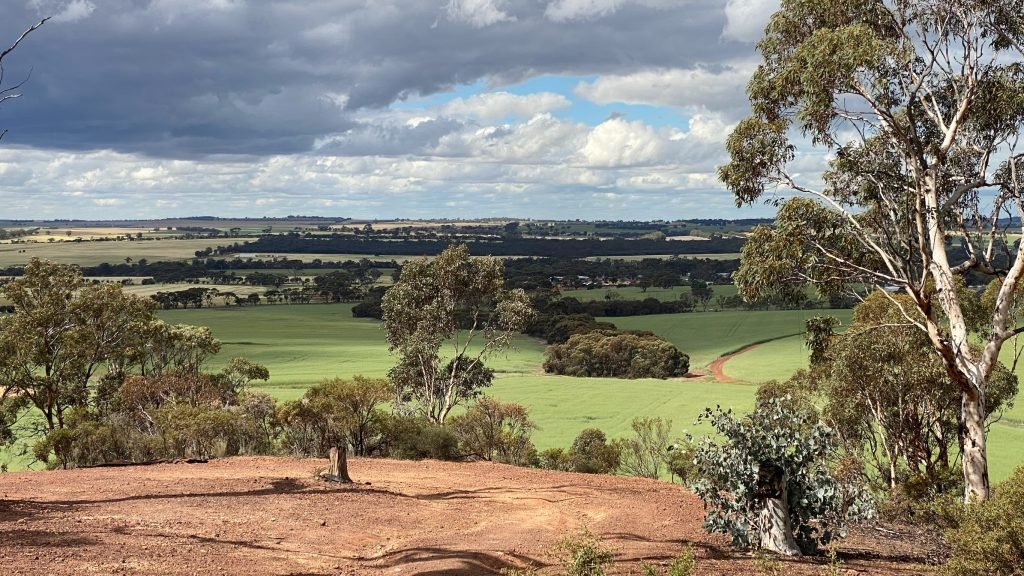
- Town Lookout. A short drive out of town, it gives you big views over Brookton and the farmland beyond. Sunset is the pick. Be careful. We suspect the last grader through here was when it was built; and there’s rubbish everywhere.
- Boyagin Rock Nature Reserve. About 10 km south-west of town, this is a wander among powderbark, jarrah and marri trees, with the numbat (Western Australia’s faunal emblem) calling it home. Good luck spotting one. They’re shy.
- Nine Acre Rock. In spring, the countryside is carpeted with wildflowers as far as the eye can see, and the ruins of an old stone house add a touch of history.
- Bibbulmun Track. The famous long-distance trail passes just west of town, and this section makes an easy day walk and picnic spot.
- Wave Rock day trip. The Brookton Highway is the quickest route from Perth to Wave Rock, if you’re feeling ambitious.
The Great Railway Station Debate
Every town has a topic that gets folks talking at the pub, and in Brookton it’s the railway station.
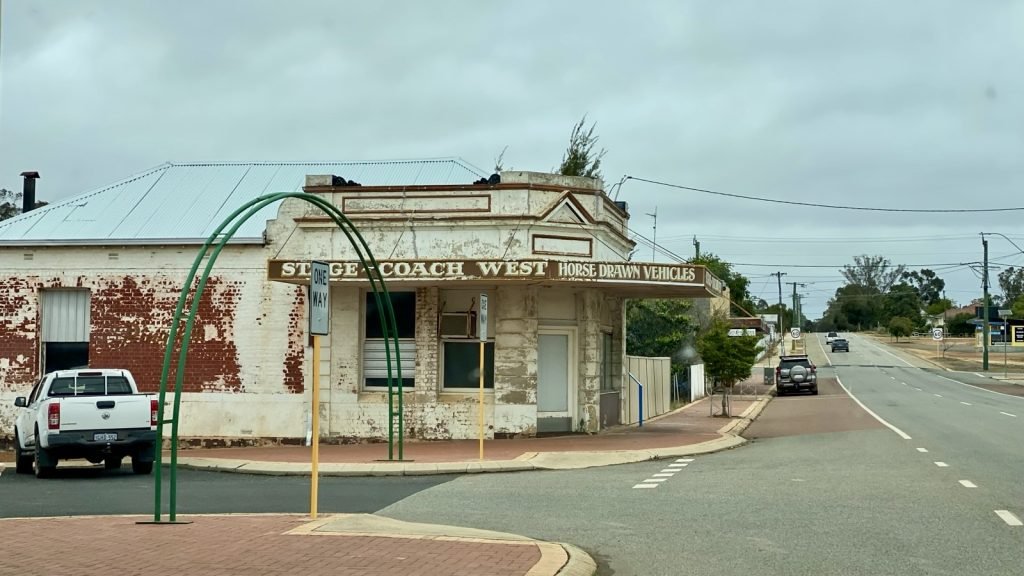
The heritage-listed station has sat empty since 2019, when it was deemed unsafe due to structural and white ant damage, sinking foundations and a damaged roof. In October 2024, council voted to demolish it, with the shire’s CEO saying the cost had blown out from about $1m to more than $2m, and that working beside an active track made the job trickier still.
The town did not take it quietly. A petition to save the station gathered more than 1300 signatures within days, and locals called it the heart and soul of Brookton. Then came the twist: after the community outcry, the shire revoked its demolition plan.
So can it be saved? It looks promising. Shire minutes from February 2026 show a railway station refurbishment contract variation on the council agenda, which suggests works are progressing. We couldn’t confirm exactly where things stand today, so check with the Shire of Brookton before you visit. There’s contractors working on it over a long weekend so things are happening. Either way, it’s worth a look for the sheer stubbornness of the community that fought for it.
Events Worth Planning Around
- Brookton Old Time Motor Show. The big one. It draws crowds from across the state for vintage cars, trucks, bikes, machinery and military displays, with entertainment in the evening. You can even camp on the oval. It has traditionally been held in autumn, so check the latest dates.
- Anzac Day. The Brookton RSL runs a gunfire breakfast, a fitting and friendly way to start the morning.
- The local agricultural show. A classic country day out.
Check the Shire of Brookton website for what’s on during your stay.
Day Trips: Nearby Towns
Brookton makes a great base. Here’s where we wandered.
Pingelly (about 20 km)
Pingelly has a rich heritage of sheep farming and sandalwood cutting, and it’s the north-east gateway to Dryandra, the largest remnant of original woodland in the Western Wheatbelt. In town, the old Courthouse now houses a museum, surrounded by Memorial Park, a top picnic spot. For stargazers, Pingelly Heights Observatory offers uninterrupted views of the Milky Way.
Dryandra Woodland (about 45 minutes from Pingelly)
This is numbat country. We’ve camped here at Gnaala Mia a few times. After good winter rains it blooms with more than 850 floral species, and dawn or dusk visitors may spot grey kangaroos, echidnas, woylies and numbats. The Barna Mia nocturnal tour is a must, but you need to book.
Beverley (about 30 km)
A classic Avon Valley town with heritage buildings and an updated main street. It’s a good spot for a pie (yes it still has a bakery), a wander and a browse of the antique shops.
York (about an hour)
York is Western Australia’s oldest inland town, and a bit of a tourist drawcard, with grand colonial buildings, a motor museum and cafés galore. Come for the heritage and stay for the lattes.
Narrogin and Wickepin (about 1 to 1.5 hours)
Narrogin is a major wheatbelt regional centre with lovely old buildings, Coles and Woolies, and is close to Dryandra. From there, Wickepin is home to Albert Facey’s Homestead, a pilgrimage for anyone who loved reading A Fortunate Life.
Corrigin (about 1 hour)
Corrigin is home to a famous dog cemetery, a wonderfully Aussie roadside oddity.
Distances are approximate, so check opening hours and driving times before you go.
The Verdict
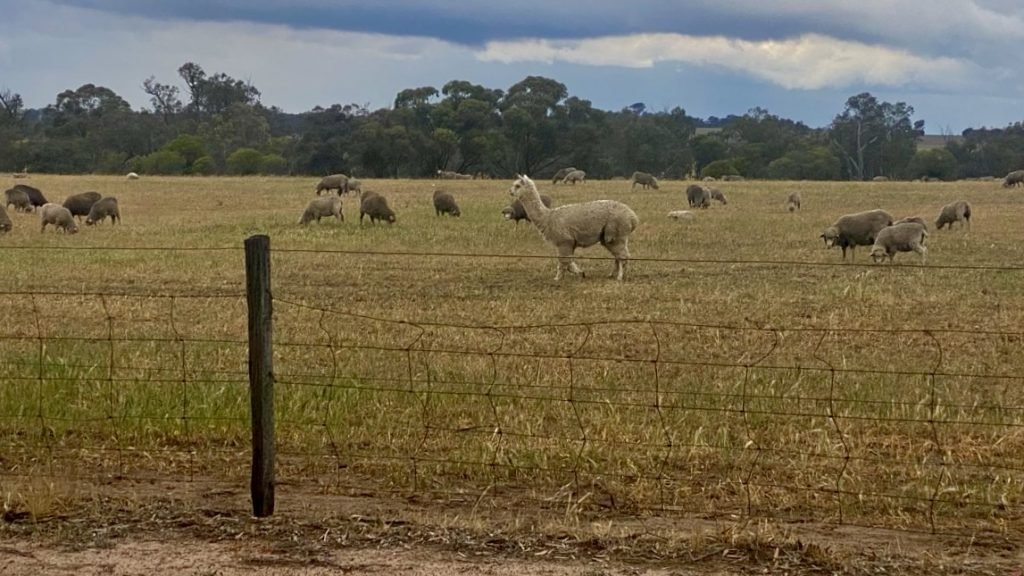
We came for rest and left with full hearts, a slightly embarrassing number of photos of an alpaca named Alan or a llama named Lenny, or maybe Louise and a new appreciation for this part of the Wheatbelt. Brookton is proof that a small town with a big history (and a community that will happily fight for its station) is more than worth the detour.
Sadly though, like a lot of towns in WA, the only cafe shuts for long weekends — and it’s the first weekend of school holidays. It’s a good thing the pub and the roadhouses are serving coffee.
If you’re wondering why it’s more likely Lenny than Louise, and why the llama is there at all, it’s because farmers put llamas with sheep as guard animals. Llamas are naturally alert and territorial toward canines, so they’ll chase off or stand their ground against dingoes, foxes, and stray dogs.
They bond with the flock and treat the sheep as their herd.
They’re also low-maintenance for the job: they eat the same pasture as the sheep, need no training, and can live with a flock for 15 to 20 years. Donkeys and specialised guard dogs do the same work, but llamas are a popular, cheap option, especially where predators are mostly dogs or foxes.
If you see one, it’s usually a single gelded male, since multiple llamas tend to bond with each other instead of the sheep.
In this farm’s case though we’re sticking with Al the alpaca.
We’re happy to recommend Brookton for anyone who needs to hit pause.
Next stop? See you down the road. Somewhere.

Leave a Comment