
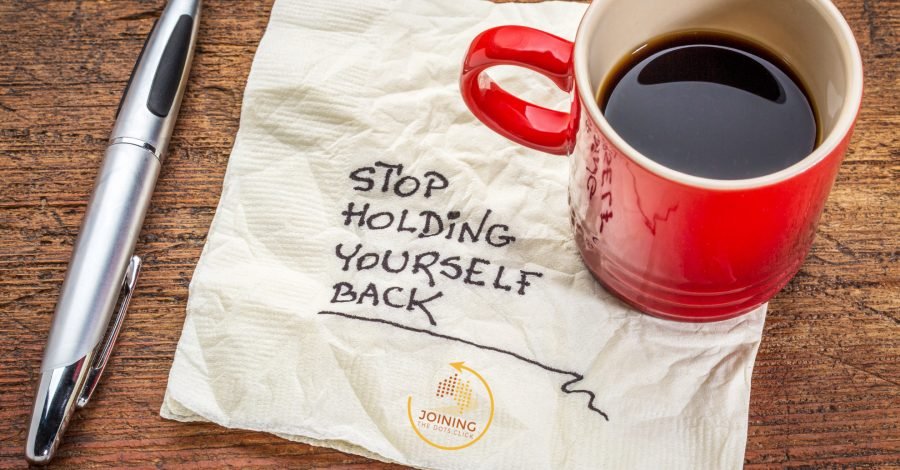
Everyone’s got one. A reason, kept somewhere handy, for why not this time. Mine used to be the weather. Genuinely.
The weekend’s storm reminded me that a spot of drizzle fell and suddenly I was a homebody with strong opinions about staying dry, in a state where “a bit of rain” barely rates a mention from anyone else. The excuse doesn’t have to be good. It just has to be available.
Riding bikes in a previous life, the oft-quoted saying was “It never rains on a Gold Wing,” but it did. Often. And often a wet ride was a great one — as long as the shiny side stayed up. It would have been more accurate to say “A Gold Wing never leaves home in the rain.”
Some excuses, though, are really good. Bulletproof, even. An illness is one of those. It’s not a flimsy ‘maybe later’ — it’s a legitimate, doctor-acknowledged, body-confirmed reason to be careful. Nobody’s going to argue with it. Least of all you.
Which is exactly what makes it worth a second look.
The Useful Lie
Here’s the thing about a good excuse: once you have one, you stop checking whether you still need it. It moves in. It gets comfortable. And because it’s true — the illness is real, the limits are real — it’s very easy to let it cover for things that have nothing to do with the illness at all. Tiredness, sure. But also fear. Also the simple, ordinary reluctance to do something new and possibly embarrassing.
I’m not saying yours is doing that. I’m saying mine was, some of the time, and I only found out by asking it directly: Is this you, or is this me?
That’s not a comfortable question. It’s much easier to let “I can’t, I’m not well” do the talking, because it ends the conversation. Nobody pushes back on illness. But sometimes ending the conversation is the problem — it means you never find out what you actually wanted to do, or whether you could’ve managed a smaller version of it.
Venturing Forth, Responsibly Reckless
To be clear — and this matters — venturing forth isn’t the same as ignoring your body. That’s not bravery, that’s just bad thinking. The point isn’t do everything despite the illness. The point is don’t let the illness make every decision by default. There’s a wide, well-lit middle ground between “stay home forever” and “summit a mountain with a fever,” and most of life happens there.
So: the short trip instead of the long one. The one hour at the party instead of zero, or instead of four. The thing you say yes to and then quietly build an exit ramp for, just in case. Not “she’ll be right” in the way that means I haven’t actually checked — more “she’ll be right” in the way that means I’ve sussed it out, packed for it, and I’m having a crack anyway. Venturing forth scaled to what you’ve actually got, not what the excuse insists you don’t.
Doing the Audit
Next time the excuse shows up, try giving it a quick, honest pat-down. Is this a “my body genuinely cannot” or a “I’d rather not risk feeling weird/tired/seen”? Both are allowed to exist. But only one of them should get a permanent veto.
And when it turns out to be the second one — when the excuse is just nerves wearing a lab coat — that’s your cue. Not to do something heroic. Just to do something. Get amongst it. Take the smaller trip. Say yes and figure out the logistics on the way there, the way people who aren’t managing a chronic condition do constantly, badly, and somehow fine.
Life’s Too Short for a Drawer Full of Reasons
This isn’t a pep talk about ignoring limits — it’s a nudge to make sure the limits are real ones, set by you and your body, not by the version of you that’s just trying to avoid the effort of getting dressed and going outside. Check the excuse before you reach for it. Sometimes it’s load-bearing. Sometimes it’s just sitting there because nobody’s questioned it in a while.
Either way — go find out. The weather’s probably fine. It usually is.
So here’s your challenge then, plain and simple: pick the thing that makes you a bit nervous to even think about, and do it anyway — smaller, slower, with all the exit ramps you need, but do it.
Comfort zones are called that because they’re comfortable, not because they’re where anything happens.
Real living doesn’t start at the front door. It starts a few steps past it, right around where the nerves kick in. That’s not the edge of what you can manage — it’s usually just the edge of what you’ve tried so far. Go, find out which one it actually is.

Leave a Comment