
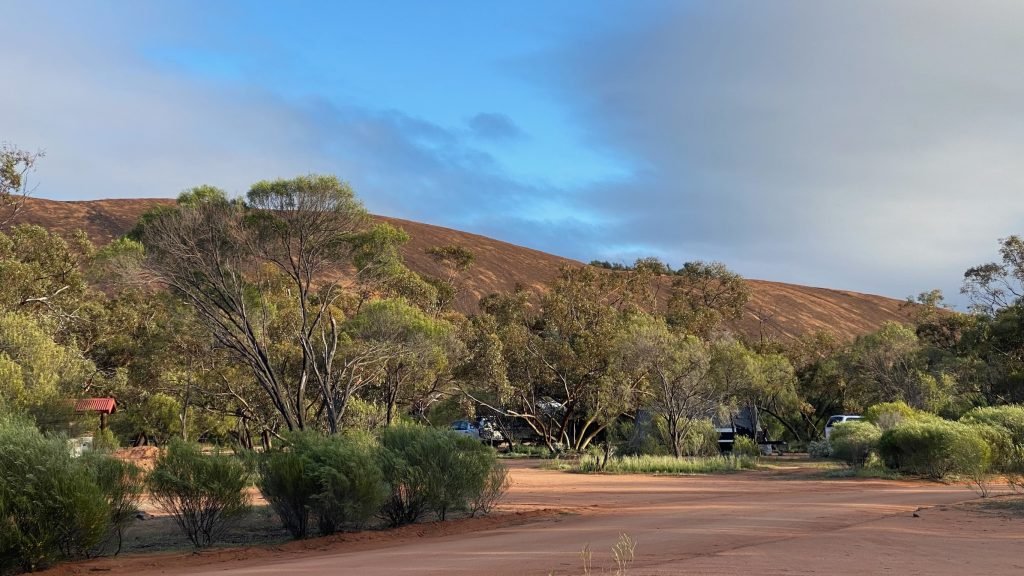
There’s a particular kind of quiet that only turns up once you’ve put enough gravel road behind you. We found it at Elachbutting Rock, a few hours north of Westonia, out where the wheat paddocks give way to red dirt and gimlet scrub. It’s not a place you pass through on the way to somewhere else — you have to actually decide to come here. And that, it turns out, is exactly what makes it worth it.
We spent a few easy days doing bits of laps of the rock like a pair of wide-eyed tourists, getting in some extra steps and soaking up the peace and quiet. Even on that first night, when the reserve was surprisingly full, the whole place stayed remarkably still. Campfires have dotted the darkness each evening, keeping the chill and the breeze at bay, and somehow even that felt calming rather than busy — more like shared but separate company than crowd noise.
A Rock With a Long Memory
Elachbutting is a granite giant rising out of the Yilgarn Craton, a slab of the earth’s crust that’s been sitting under the southern half of Western Australia for somewhere between 2.5 and 3.5 billion years. Everything else out here — the wheat, the towns, the roads — is a very recent addition to a very old landscape.
The name is generally thought to mean “that thing standing” in the local Noongar dialect, which feels about right for a rock you can spot from a long way off across flat country. Some of the caves around its base hold Aboriginal drawings, a reminder that people have been finding their way to this landmark for a lot longer than there’s been a campground here.
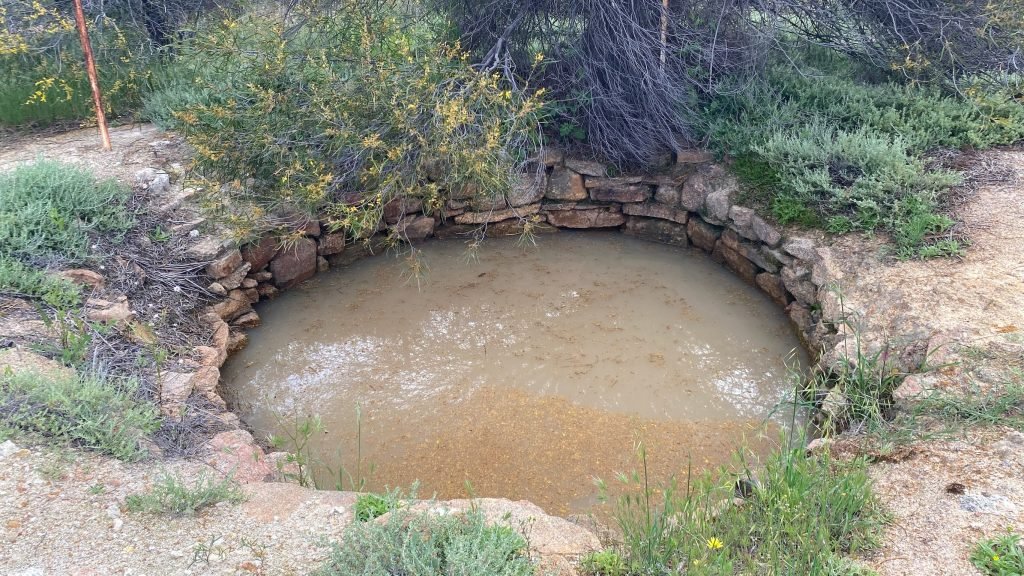
Europeans arrived comparatively recently — a settler named B. Clarkson came through in 1864 and, in a moment that feels almost endearing in hindsight, named it Mount Bucket. It didn’t stick. Later, explorer Harry Anstey passed through in 1887 while pioneering a route to the Yilgarn goldfields, and wrote of finding an enormous mass of rock with waterholes and wells capable of holding “any amount of water.” That water was exactly what kept prospectors and settlers alive out here, and Elachbutting Well, tucked behind the rock, still stands as a solid example of the wells built right across the Wheatbelt to catch and store it.
The Wave, the Tunnel, and the Cave
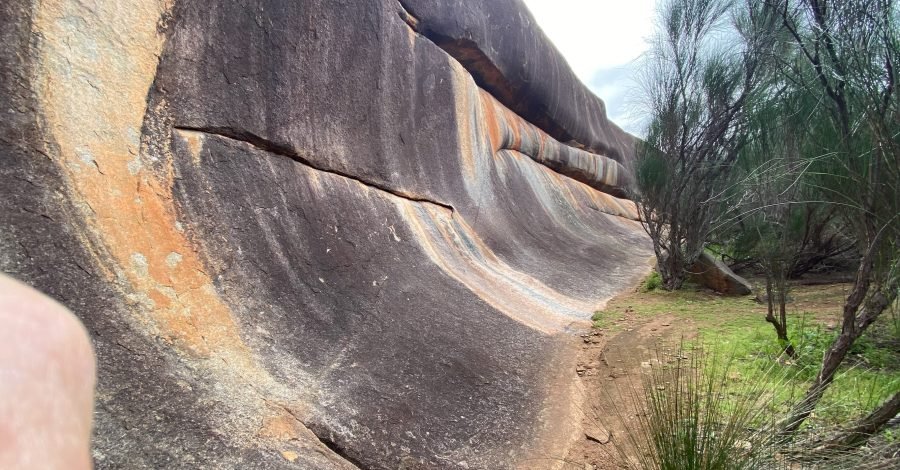
Elachbutting is often compared to Wave Rock near Hyden, and it’s not hard to see why — one section curls into a similarly striking wave-shaped overhang, complete with the streaked colouring that comes from decades of mineral-stained water running down the granite. It’s a smaller wave than its famous cousin, but a lot quieter to enjoy.
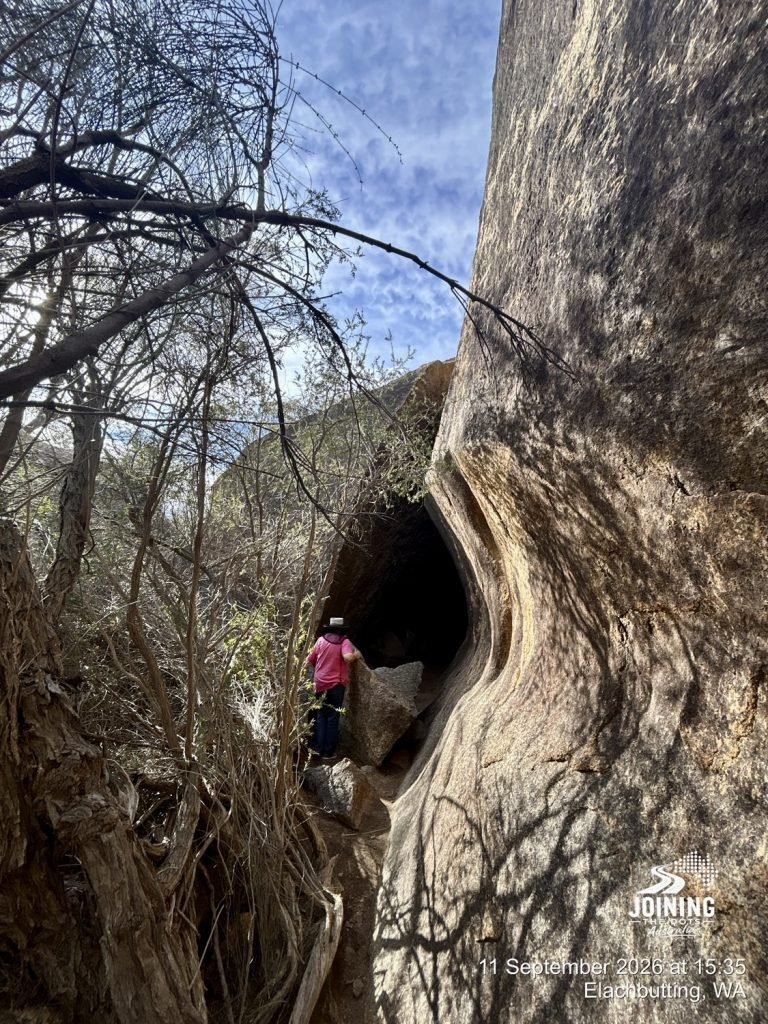
The rock’s real standout, though, is Monty’s Pass: a narrow tunnel, 30 to 40 metres long, formed when a huge slab of the outer rock sheared away and slid off — possibly the work of an ancient earthquake. Walk to the end of it and you reach Kings Cave, an echoing chamber that does exactly what you’d hope a cave called Kings Cave would do. A gnamma hole or two sit up on top of the rock as well, natural rock basins that have been collecting rainwater for millennia — the same basic technology the old wells were built to imitate.
Stars, Wildflowers, and a Curious Absence
At night, the reserve’s biggest feature isn’t on the ground at all. With no light pollution for miles, the starfield out here is something else — the kind of sky that makes you tip your head back and just stand there for a while.
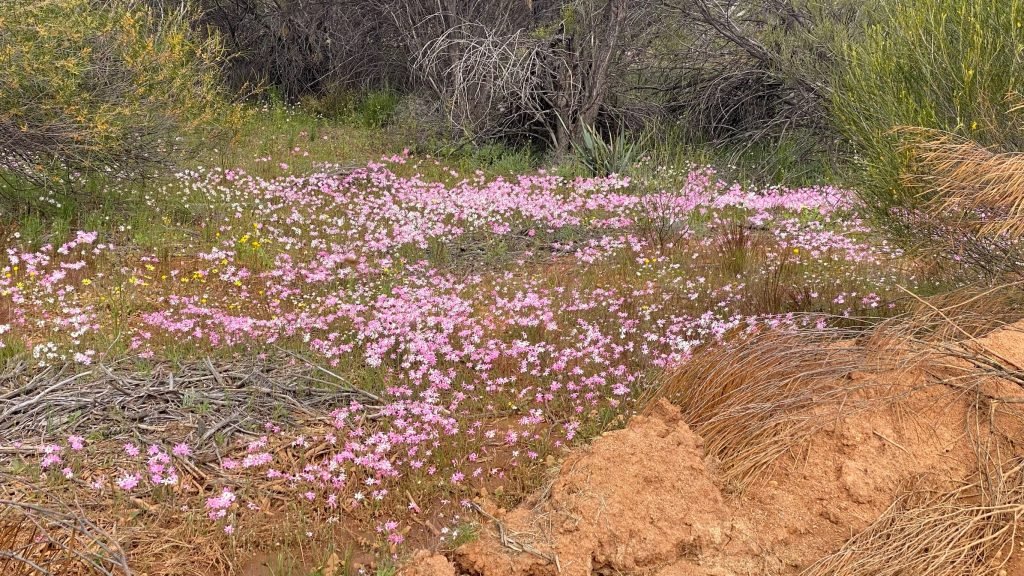
By day, it’s the wildflowers doing the work, scattered right through the reserve, and the birdlife is constant. But here’s a strange thing we noticed, and it held true at nearby Baladjie as well: no mammals. No kangaroos, no wallabies, no emus, no echidnas — not one, the whole time we were there. We still haven’t worked out why.
Walking the Rock
If you’re up for it, a trail runs the full distance around Elachbutting Rock — approximately 6 kilometres (3.7 miles) one way — giving you the chance to take in the natural beauty surrounding the granite from every angle. It’s the kind of walk that rewards an unhurried pace, which suits this place perfectly.
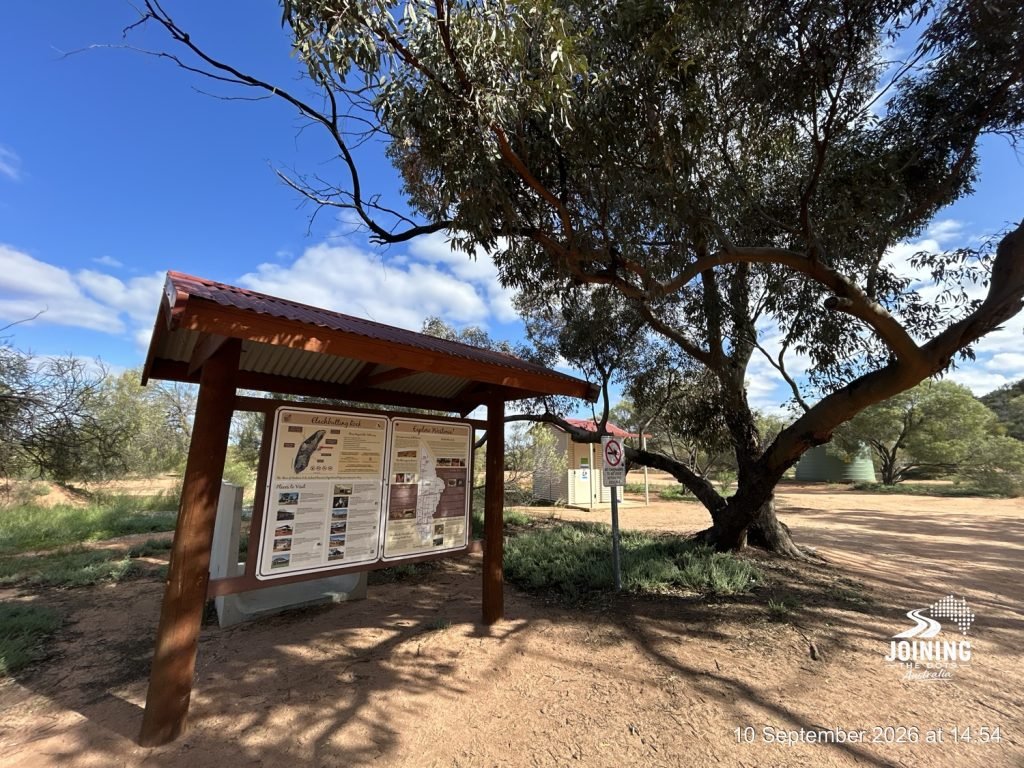
Back at camp, there’s a flush toilet, which always feels like a small luxury out this far. It comes with its own quirk, too: Kinda like the one at Baladjie Rock, where the door lock is a flagstone you nudge into place behind you. No bolt, no latch — just a bit of granite doing its job. Here the rock is on the outside and the bolt and latch takes a contortionist to make it work. But hey, they work. Just another reason to travel with your own ensuite, wherever it happens to be parked.
Leaving It as We Found It
The other thing worth mentioning is what wasn’t there: rubbish. None of the litter you sometimes brace yourself for at places where people come and go. Everyone we crossed paths with seemed to genuinely be leaving no trace, and it showed.
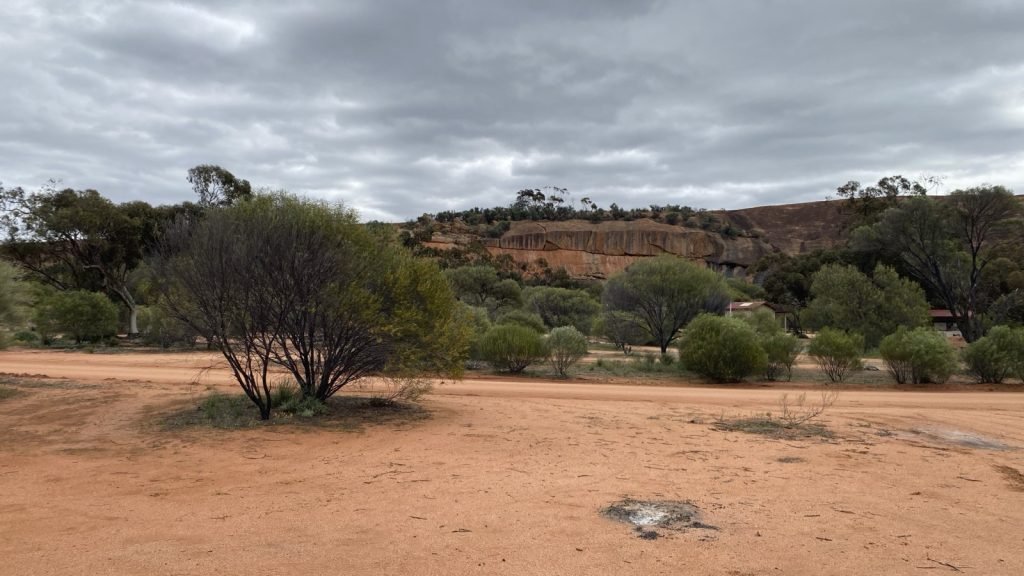
If there’s one gentle grumble, it’s the random ground fires scattered around the place, left to smoulder without being properly put out. It’s a small thing, but it’s the kind of small thing that chips away at what makes a place like this feel special. A rock that’s been standing for a few billion years deserves a bit more care than that — and so does the next group of wide-eyed tourists who make the drive out to find it.

Leave a Comment