
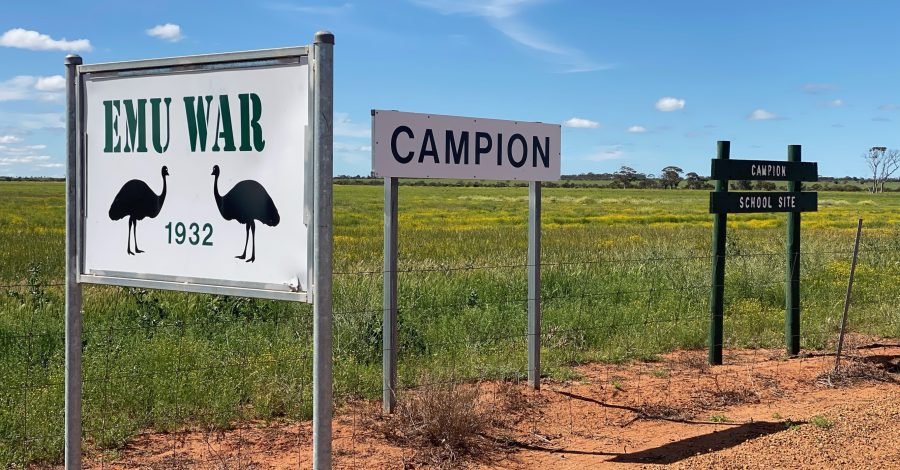
A Joining The Dots touring guide to Campion, the Emu War, and the wild granite country around Mukinbudin
Somewhere between Mukinbudin and the wave-walled wonder of Elachbutting Rock, out on the Koorda–Bullfinch Road, sits a town that doesn’t exist anymore. No pub, no school (but you’ll see where it was), no footy oval crowd — just paddocks, a bit of history, and the ghost of the single most embarrassing military campaign in Australian history. Welcome to Campion, population: emus (occasionally).
If you’re planning a Wheatbelt road trip, Campion deserves a spot on your list — not because there’s anything left to see, but because so little ever needing to be seen is exactly the point. Here’s how to make the most of it.
First, the backstory: why was there a ghost town here at all?
Campion started the way a lot of Wheatbelt towns did — with hope, hard yakka, and a rail line. In the early 1920s, soldier-settlers and migrant farmers were sent out to clear the bush, paid by the acre by the Agricultural Bank, and many decided to stay and buy blocks of their own. A community sprang up fast: a store, a school, footy and cricket teams. When the Wyalkatchem–Mukinbudin railway pushed through, the town was surveyed, named after Governor Sir William Campion, and officially gazetted in 1928. The Governor himself even rolled into town on a special train in 1930 for the grand tour.
Then the wheels fell off. Wheat prices crashed from 1926, the Depression hit, and Campion farmers were among the first to organise against it, helping spark the Wheatgrowers’ Union and the 1932 wheat strike. As if collapsing grain prices weren’t enough, that same year the district was hit by something considerably harder to negotiate with: about 20,000 emus.
Enter the army (this does not go well for the army)
Picture it: desperate farmers, plummeting crop prices, and now a small nation of flightless birds trampling fences and demolishing what was left of the wheat. So the local MP did what any reasonable person would do — he asked for the army.
In November 1932, Major G.P.W. Meredith arrived in Campion with two soldiers, two Lewis guns, and 10,000 rounds of ammunition, fully expecting to make quick work of it. What followed instead became known, with total sincerity, as the Emu War — and the emus won.
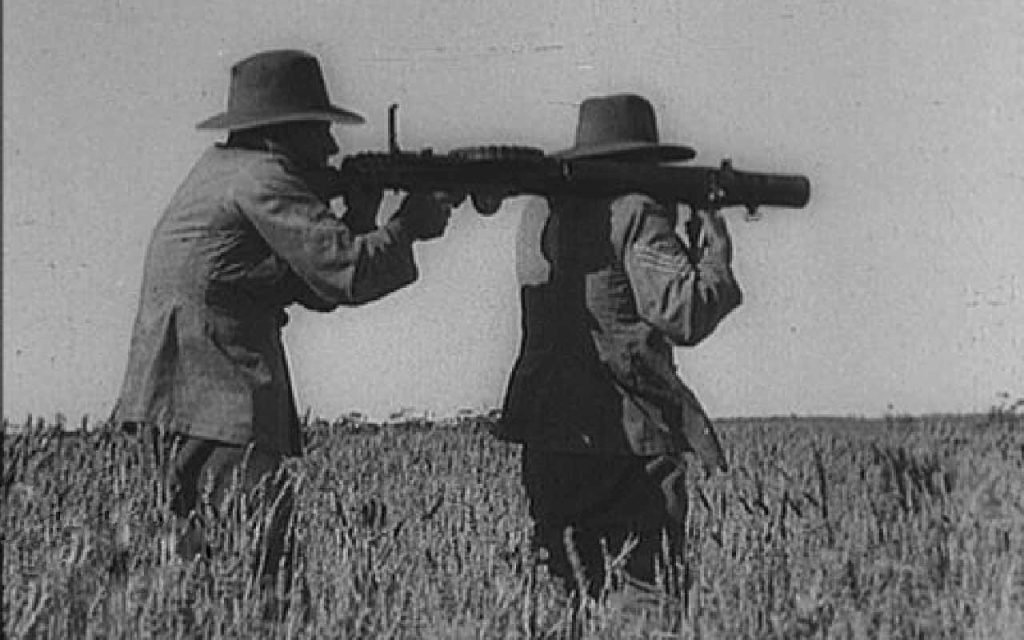
The birds turned out to be maddeningly hard to pin down. They scattered into small, unpredictable groups the moment the shooting started. In one ambush near a dam, over a thousand emus wandered into range — only for a machine gun to jam after a dozen shots, and the rest scattered into the scrub. Someone had the bright idea of mounting a gun on the back of a truck to chase them down; the ride was so rough the gunner couldn’t hit a thing, and the emus simply outran the vehicle anyway. By the time Meredith was recalled in December, his official tally was 986 confirmed kills from 9,860 rounds fired — a suspiciously tidy 10 bullets per bird — against a population that barely noticed.
It remains one of the very few conflicts in history where the wildlife is, by consensus, considered to have won.
Touring priorities: how to spend your time out here
Campion itself is now just paddocks and memory, so treat it as a stop on a bigger loop rather than a destination in its own right. Here’s a sensible order of priorities:
- Don’t stand in the paddocks and enjoy the absurdity. Look from the road verge — respect bio security. There’s genuinely something delightful about looking at a sign outside an empty Wheatbelt field knowing this is where machine guns lost to birds. Bring the story, not high expectations of infrastructure — there’s little signage and nothing built up, so do your reading beforehand (you’ve just done that part).
- Mukinbudin — refuel and get context. The nearest town has fuel, a caravan park, supplies, and the famous Blue Tree Project, which started right here. It’s your logical base for exploring the district and a good spot to ask locals for the folklore version of the Emu War, which tends to be even better than the official one.
- Elachbutting Rock — the real showstopper. About 70–odd km northeast of Mukinbudin, this granite monolith is the district’s headline act: a colourful wave-wall rivalling the famous Wave Rock at Hyden, a 40-metre tunnel called Monty’s Pass, and a large acoustic cave known as King’s Cave. A 6 km track circles the rock through bushland, and there’s free camping on the far side if you want to make a night of it.
- Beringbooding Rock — the bonus round. Close enough to Elachbutting that you can tick off two monoliths in one trip, with its own free camping and walking trails.
- The rabbit-proof fence tie-in. Campion’s original townsite sat right at the intersection of the railway and the State Barrier Fence — worth a mention if you’re the kind of traveller who likes connecting one bit of WA history to the next (rabbits, emus, it’s a whole ecosystem of things Western Australia has tried and failed to shoot its way out of).
The takeaway?
Campion won’t take up much of your day, but it earns its place on the map by being one of those brilliantly Australian stories — dogged optimism, questionable planning, and a punchline delivered by wildlife. Pair it with a proper visit to Elachbutting Rock and you’ve got a day trip that’s equal parts geology, history, and comedy. Just don’t expect the emus to still be there. They’ve had ninety years to keep their distance, and by all accounts, they’re very good at it.

Leave a Comment