A light-hearted, slightly cynical meditation on what actually matters — from a country that’s genuinely pretty good at figuring this out, when it’s not distracted by jet skis.
A meditation on what actually matters — from a country that’s genuinely good at this, when it stops to think about it.
Here’s a thought experiment. Imagine you’re near the end of your life, doing that thing where you look back at everything. What comes up?
Not the car upgrade. Not the kitchen renovation. Not the gadget you queued for.
It’s the Sunday afternoon at the beach where nobody checked their phone. The dinner that stretched so late you had to apologise to the neighbours. The time a mate dropped everything, drove three hours, and helped you move without making you feel guilty about it for a second.
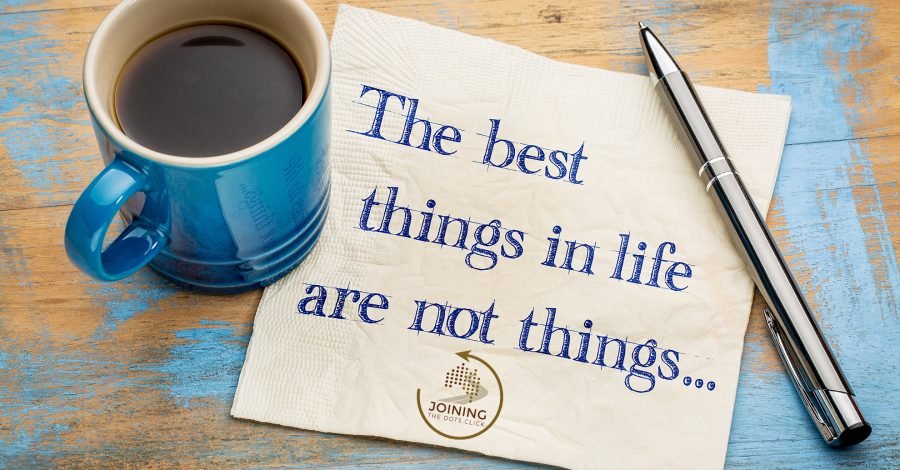
The best things in life aren’t things. This isn’t new wisdom — philosophers have been making this point for millennia, long before anyone had to contend with same-day delivery or a phone algorithm that knows your desires better than you do. But in a world engineered to make consumption feel like progress, the reminder still lands with surprising force.
So here it is. Written from a specifically Australian vantage point; watching a government destroy the lucky country — but enough of that — which is to say, with affection, a little irreverence, and genuine conviction.
Your Health
Surprise! There’s no version of a good life that doesn’t start here — given Michael’s recent issues you’d expect that. Health is the foundation that everything else rests on, and it is, by a considerable margin, the thing we’re most likely to take for granted until the moment we can’t.
You can have deep friendships and meaningful work and a home you love, but if your body is failing you, all of it is harder. Chronic illness narrows the world. Persistent pain exhausts the spirit. The absence of health makes the presence of everything else feel kind of, provisional.
Australians have a complicated relationship with this. On one hand, we live somewhere with extraordinary natural conditions for staying well — sunshine, coastline, an outdoor culture that genuinely encourages movement. On the other hand, there’s a stubborn streak of self-neglect that runs through the national character, particularly among men, who have elevated the avoidance of medical care almost to an art form. The GP visit that might catch something early goes unmade. The symptom that’s been bothering you for months gets filed under “probably nothing.”
It isn’t nothing. And the body, for all its resilience, keeps the score.
Looking after your health doesn’t require expensive interventions or elaborate routines. It requires sleep, movement, reasonable food, honesty about how much you’re drinking, and a willingness to ask for help — from doctors, from people who care about you, from professionals when the weight gets too heavy to carry alone. That last one matters as much as any of the others. Mental health is health. The distinction we’ve drawn between the two has never been particularly useful.
None of this is complicated. It is, however, easy to postpone. And postponement, compounded over years, has consequences.
The People Who Show Up
There’s a kind of friendship that doesn’t announce itself — it just appears when it’s needed. The friend who, when you say you’re struggling, doesn’t offer advice or optimism but simply asks what you need and then does it. The one who remembers the thing you mentioned six months ago that mattered to you. The one who tells you the truth when everyone else is being careful.
This kind of relationship is, without exaggeration, one of the great determinants of a life well-lived. The research on this is remarkably consistent: people with strong social bonds live longer, recover from illness faster, report greater satisfaction with their lives, and handle adversity more effectively. Loneliness, by contrast, carries health risks comparable to smoking fifteen cigarettes a day.
We don’t talk about friendship with the seriousness it deserves. We talk about career development and financial planning and physical fitness, and all of those things matter — but the quality of your close relationships probably has more influence over how your life feels than any of them.
The Australian version of friendship has always had a practical, unsentimental quality that I think is actually quite healthy. We’re not always good at saying what people mean to us directly — that can sometimes be a limitation — but there’s a deep tradition of showing up. Of doing. Of being the person with the ute, or the casserole, or the spare room, or the afternoon free to just sit and listen. That form of love, expressed through action rather than declaration, is real and it sustains people.
Invest in your friendships deliberately. Make the call you keep meaning to make. Show up when it’s inconvenient. It compounds, over time, into something irreplaceable.
Genuine Laughter
Not performance. Not the social reflex that passes for amusement in professional settings. The real thing — involuntary, unguarded, the kind that takes over entirely and leaves you slightly undone.
There’s a reason humans have laughed together for as long as we’ve been human. It is one of the primary mechanisms by which we signal safety to each other, dissolve tension, process difficulty, and remember that life, whatever else it is, contains genuine absurdity and delight. The shared laugh is a form of intimacy. It says: we see the same thing, we’re in the same world, we’re okay.
Australian humour has always been comfortable with darkness — we’ve tended to find the comedy in hardship rather than pretending it isn’t there, which is a more honest and arguably more useful approach than the alternative. There’s something in that worth holding onto. The ability to laugh at circumstances, at yourself, at the gap between how things are supposed to go and how they actually go — that’s not cynicism. That’s a form of resilience.
If you’ve been going through a stretch where genuine laughter has been scarce, pay attention to that. It’s a signal worth heeding.
Time Outside
Australia’s natural environment is extraordinary by any measure — coastline, desert, bush, rainforest, mountains. We were handed one of the most beautiful parts of the planet to live in, and the appropriate response to that is to actually be in it.
Thats’ kind of why were out here — smelling the roses.
There is something that happens when you spend time in natural surroundings that doesn’t reliably happen anywhere else. The nervous system settles. Problems find their correct proportions. The world reveals itself as very large and very old, which is — strangely — a comfort. Your difficulties are real, but they exist within a context that dwarfs them, and that perspective is genuinely (and generally) useful.
This is available, almost entirely for free, to most Australians within a reasonable distance of their front door. The beach at dawn. The national park on a Saturday morning. The river path after work. These aren’t luxuries — they’re part of the extraordinary luck of living here, and they’re squandered more often than they’re used.
There’s a version of the good life that asks nothing more sophisticated than this: go outside regularly, pay attention to where you are, let the environment do what it’s inclined to do to a person who’s present enough to receive it.
Peace of Mind
This one is harder to name than the others, which is probably why it so often goes unprotected until it’s already been compromised.
Peace of mind is not the same as happiness. It doesn’t require that things be going particularly well. It’s something quieter — the absence of a persistent low-grade dread, the ability to be present without your attention being constantly pulled toward what might go wrong. It is, as anyone who has lost it knows, one of the most precious states available to a human being.
The cruel irony is that a great deal of what we acquire in the hope of producing security tends to undermine it. The financial overextension that requires sustained anxiety to maintain. The lifestyle that looks good from outside but feels precarious from within. The possessions that need managing, insuring, replacing. Complexity, past a certain point, breeds not comfort but worry.
Peace of mind tends to live in simplicity — in living within your actual means, in keeping your commitments, in being honest with the people around you, in carrying only what you genuinely need to carry. It comes from integrity: the quiet knowledge that you’re living in accordance with what you actually value, rather than performing a version of success that doesn’t fit.
It is built slowly and can be dismantled quickly. It’s worth more than most things, and it cannot be purchased.
Time, and What You Do With It
Everything else on this list is, in the end, a way of talking about time — specifically, how you choose to spend the hours that constitute your life.
Time is the only resource that is genuinely non-renewable. Money lost can be recovered; health, within limits, can be restored; relationships, sometimes, can be repaired. But time spent is simply gone. There’s no correction mechanism, no second allocation.
The difficulty is that time doesn’t feel scarce when it’s abundant. Youth and busyness both conspire to make the future feel like something that can absorb whatever gets deferred — the relationship you’ll invest in properly when work settles down, the health habit you’ll start when the timing is better, the conversation you’ll have when you’re ready. And then, with a transition that happens gradually and then suddenly, the arithmetic changes.
What the people who seem to get this right have in common isn’t that they’ve found more time, but that they’ve become more honest about what they’re spending it on. They’ve noticed the gap between what they say they value and where their hours actually go, and they’ve done the uncomfortable work of closing it.
The moments that constitute a life, looking back, are ordinary ones. The weekend mornings. The long dinners. The conversations that wandered. The times someone was fully present with someone else — not planning, not distracted, not elsewhere — just genuinely there. Those accumulate into something. And their absence, equally, accumulates into something.
A Final Thought
What strikes me about this list is that everything on it is, at its core, available. Not always easy — health takes attention, deep friendships take time and courage, especially when you’re blunt. Peace of mind takes a kind of disciplined honesty about your own life. But none of it requires wealth. None of it requires anything you have to acquire.
That should make it simple. And yet the noise is extraordinary — the advertising, the comparison, the ambient sense that a better version of your life is perpetually available just beyond the next purchase. It takes real effort, in the current environment, to keep your attention on what you’ve already established actually matters.
But it’s worth the effort. The things that make a life feel full — the health that lets you be present, the people who know you, the moments of genuine connection and laughter and beauty, the quiet of a mind at peace — are already within reach.
They were always within reach.
Written with the conviction that comes from having chased enough of the wrong things to recognise them.

Leave a Comment